Sheet 03·01 · Site survey · 7°38′S 112°54′E

Brand identity and catalog website 2026

Kainvela

A fabric brand built from scratch for a textile group: name, logo, palette, Instagram launch and a catalog website that sends orders to the admin.

HTML CSS JavaScript Lenis Google Fonts (Cormorant Garamond, Manrope) WhatsApp click-to-chat Canva
Role Brand Designer and Front-end Developer
Year 2026
Stack HTML, CSS, JavaScript, Lenis
Team Solo build

Site survey

Web systems · 2026 · 1 of 8

Overview

What this project needed to solve

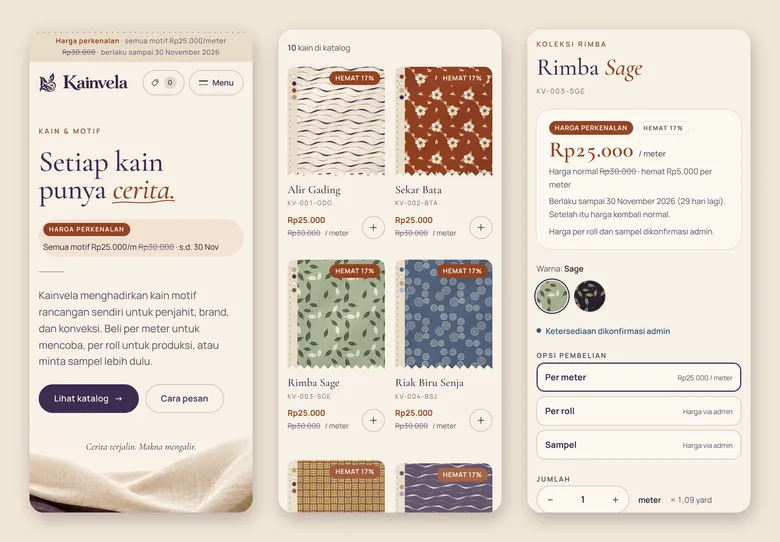
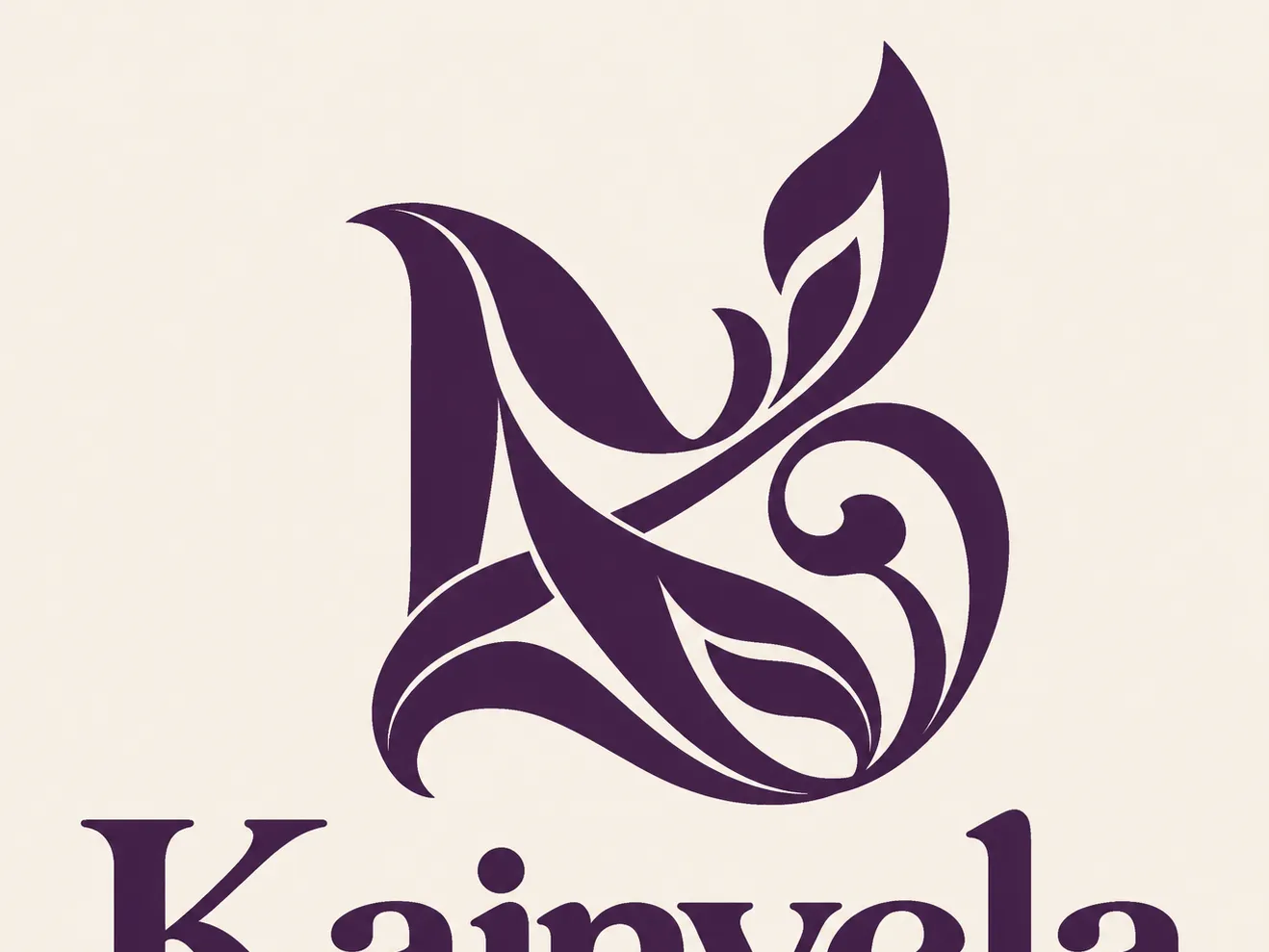
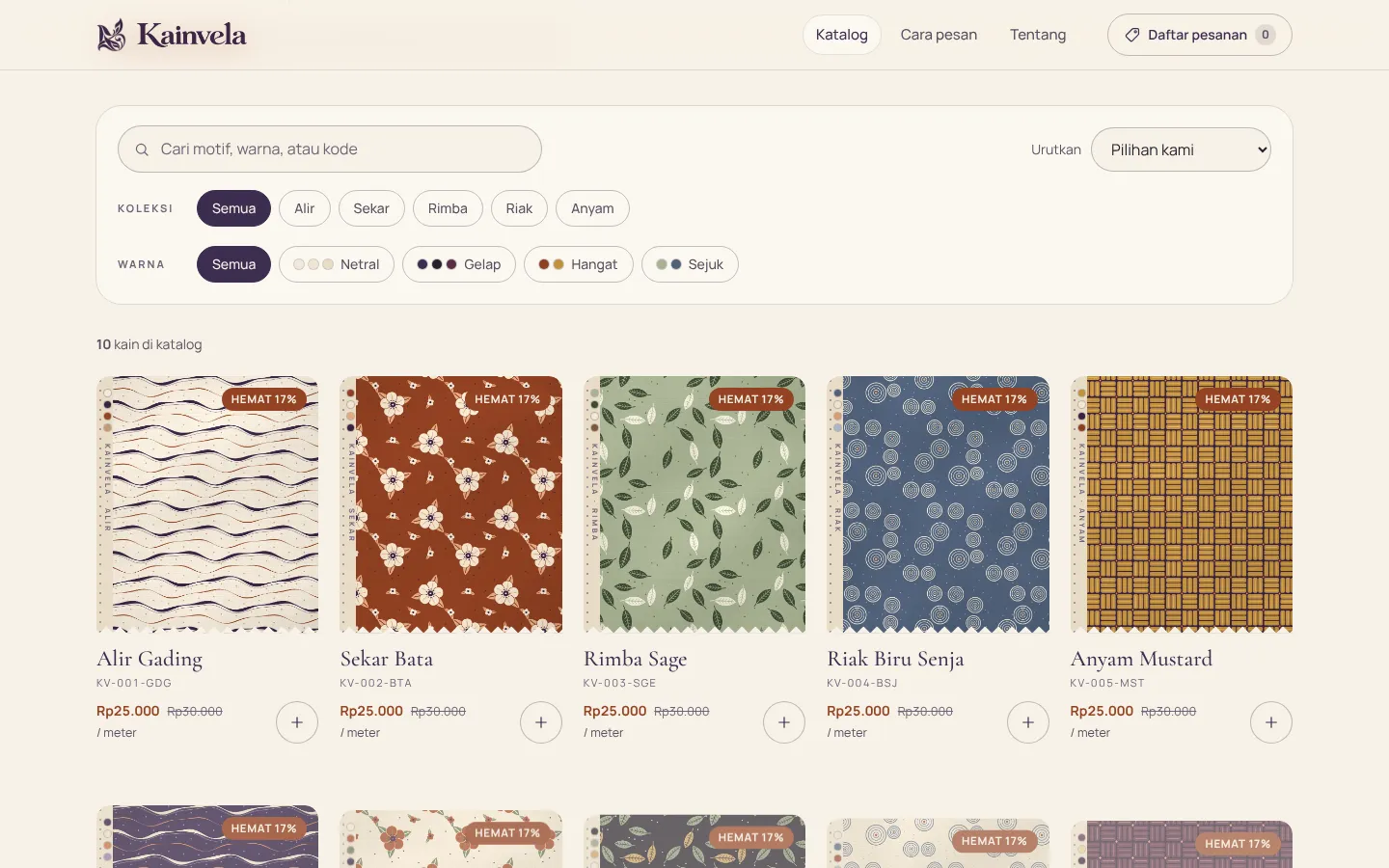
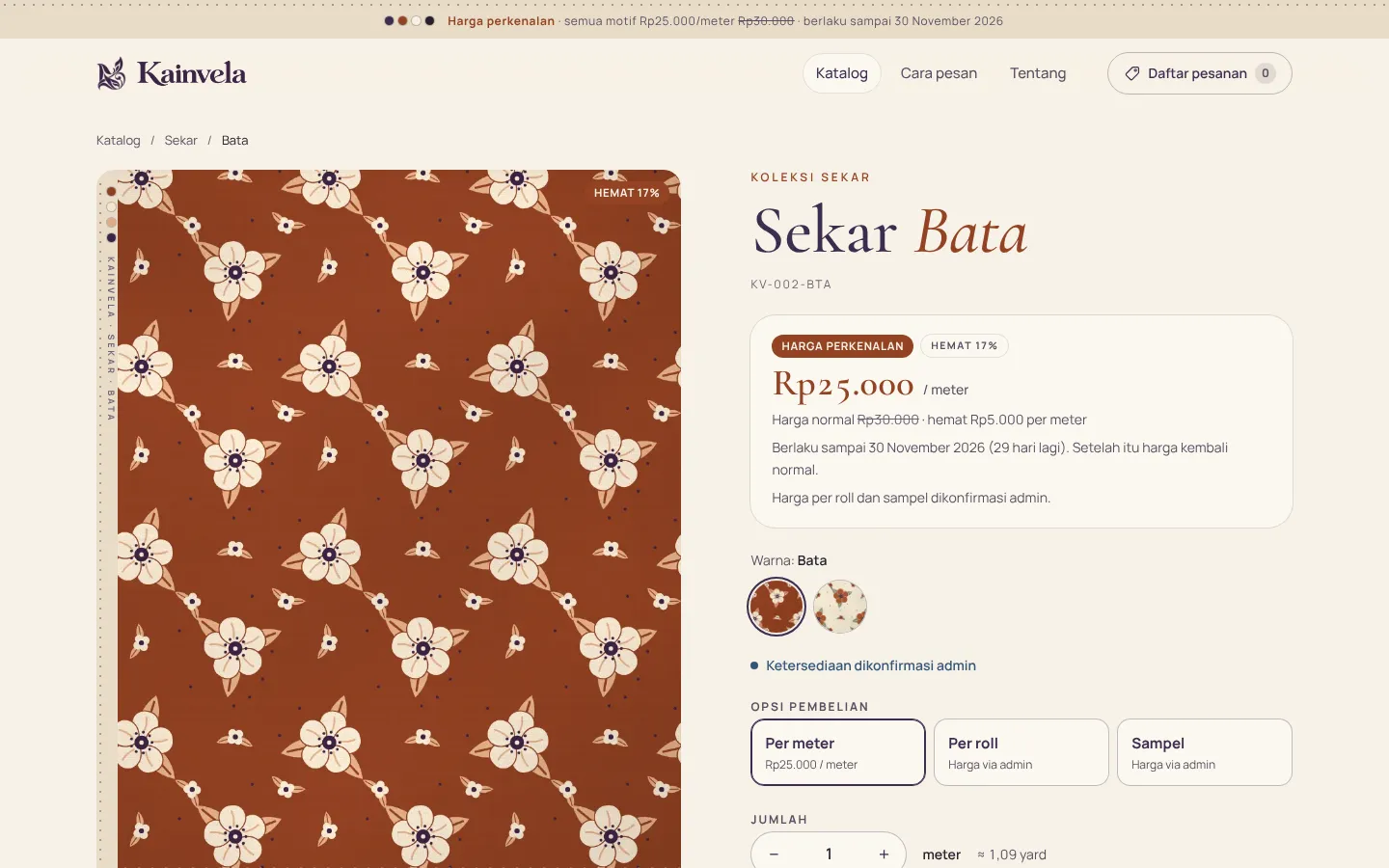
Kainvela is a printed fabric brand created for the textile group Yahya works with, giving its motif fabrics a retail identity separate from the factory name. The work covers the brand name, the chosen logo concept "Kain mengalir", a four-colour palette, the Instagram account @kainvela.id with three launch posts including a logo motion Reel, and a static catalog website. The website presents 10 fabrics from 5 original motifs (Alir, Sekar, Rimba, Riak and Anyam, each in two colours) and lets buyers build an order list that is sent to the admin for confirmation.
Problem framing

From messy workflow to clearer product requirements.

The work started by separating staff operations from customer booking needs, then turning both into clearer product requirements.

Challenge

What made the work difficult?

The textile group wanted to sell motif fabrics to retail buyers, tailors, small brands and garment makers under a store identity rather than the factory name. There was no brand, no visual identity, no sales channel and no catalog to start from. Stock, final pricing and shipping are still confirmed by people, so the online experience could not promise instant checkout.

User and business need

What had to become clearer?

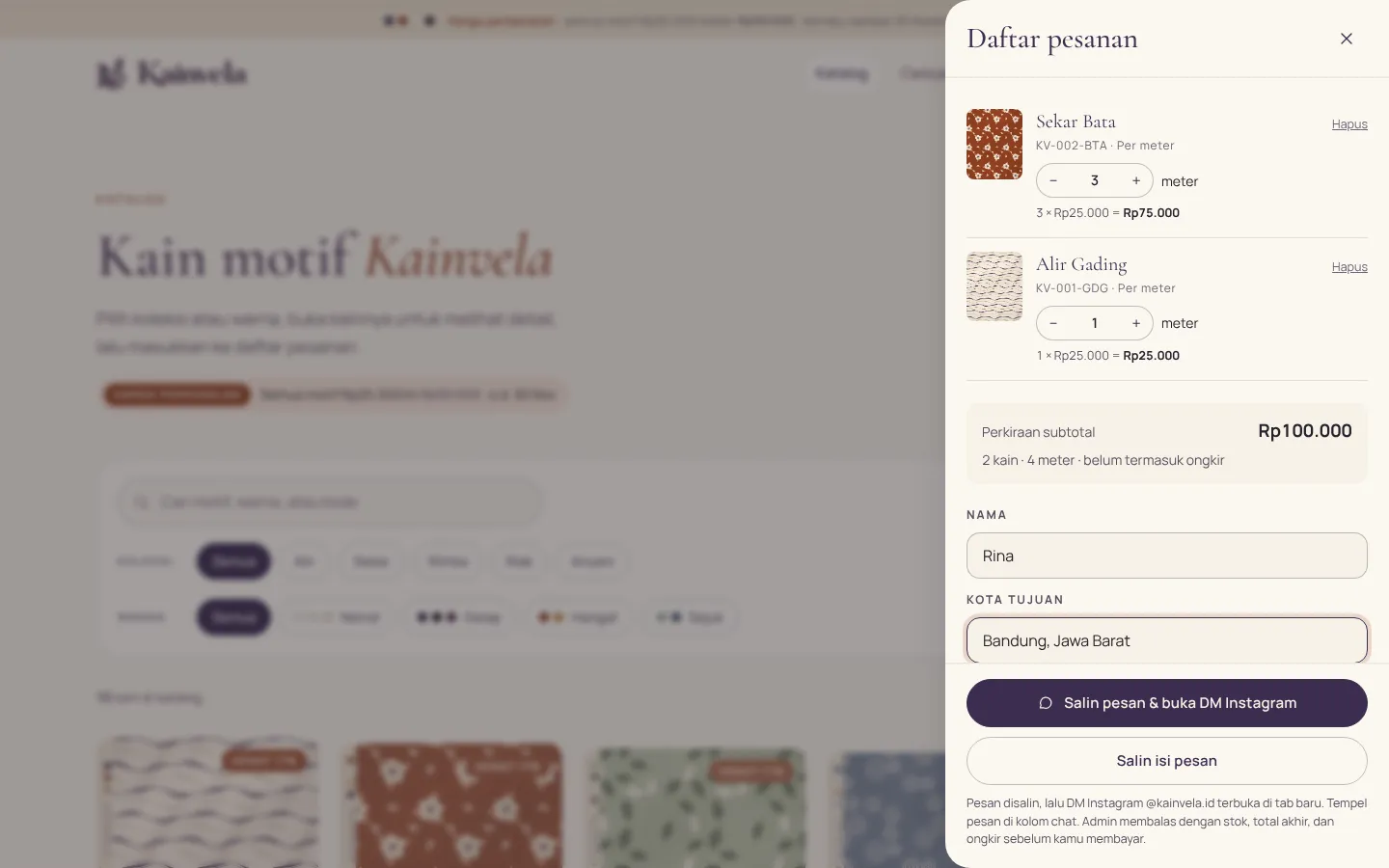
How might a factory-backed fabric line present its own motifs to small buyers in a way that feels like a real brand, while keeping stock, totals and shipping under admin confirmation? Buyers need to browse motifs and colours, choose per-meter, per-roll or sample purchases, and hand a clear order to the admin without a full e-commerce backend.

Process

How the project moved from requirements to usable flow.

01

The identity started with naming and three logo concepts; Concept 01 "Kain mengalir" (flowing fabric) was chosen, together with a palette of plum, brick, ivory and charcoal and the taglin...

Solution

What I built and why it mattered

A static website built with plain HTML, CSS and JavaScript has a home page, a catalog with collection and colour filters, search and sorting, a fabric detail page, an ordering guide with FAQ, an about page and a 404 page. On the detail page buyers choose per meter, per roll or sample, set the quantity and see an estimated price, then add the fabric to an order list stored in the browser. The order list is sent as a prefilled WhatsApp message, or copied and opened as an Instagram DM while no WhatsApp number is set. An introductory price is shown with the normal price struck through and switches back automatically after the dated promo ends; the site also follows the device dark mode and reduces motion when the device asks for it.

Outcome

Impact and proof points

Kainvela gives the textile group a ready brand identity and an active Instagram presence for selling its own motifs to retail and small business buyers. The catalog website is ready for review and can be opened directly in a browser, with store settings such as the admin WhatsApp number, prices and promo end date kept in one config file. It gives the admin a structured order message to confirm stock, total and shipping before payment, without needing a checkout backend.

Reflection

What this case says about how I work.

Start from the real workflow before deciding the interface structure.

Make system states visible so users know what happened and what to do next.

Write interface copy that reduces follow-up questions, not just fills empty space.