Production order tracking 2026

Order Digital

A production tracking system for digital-printing orders that follows every PO line from intake through tracing, proofing, printing and shipment, on desktop and phone.

Laravel PHP PostgreSQL React Inertia.js Tailwind CSS Google Sheets API WhatsApp (Fonnte) API
Role Full-stack Developer
Year 2026
Stack Laravel, PHP, PostgreSQL, React
Team Solo build
Overview

What this project needed to solve

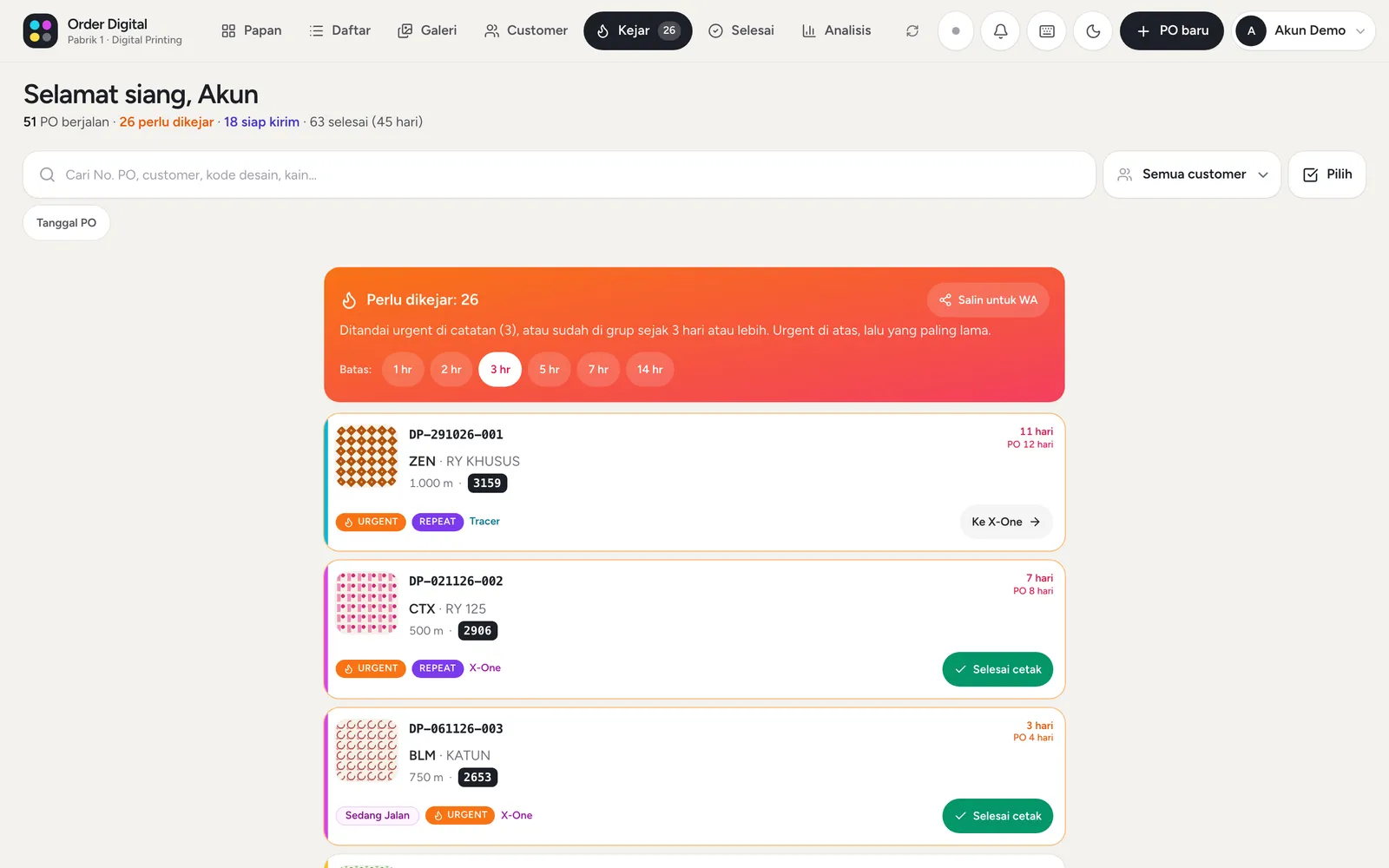
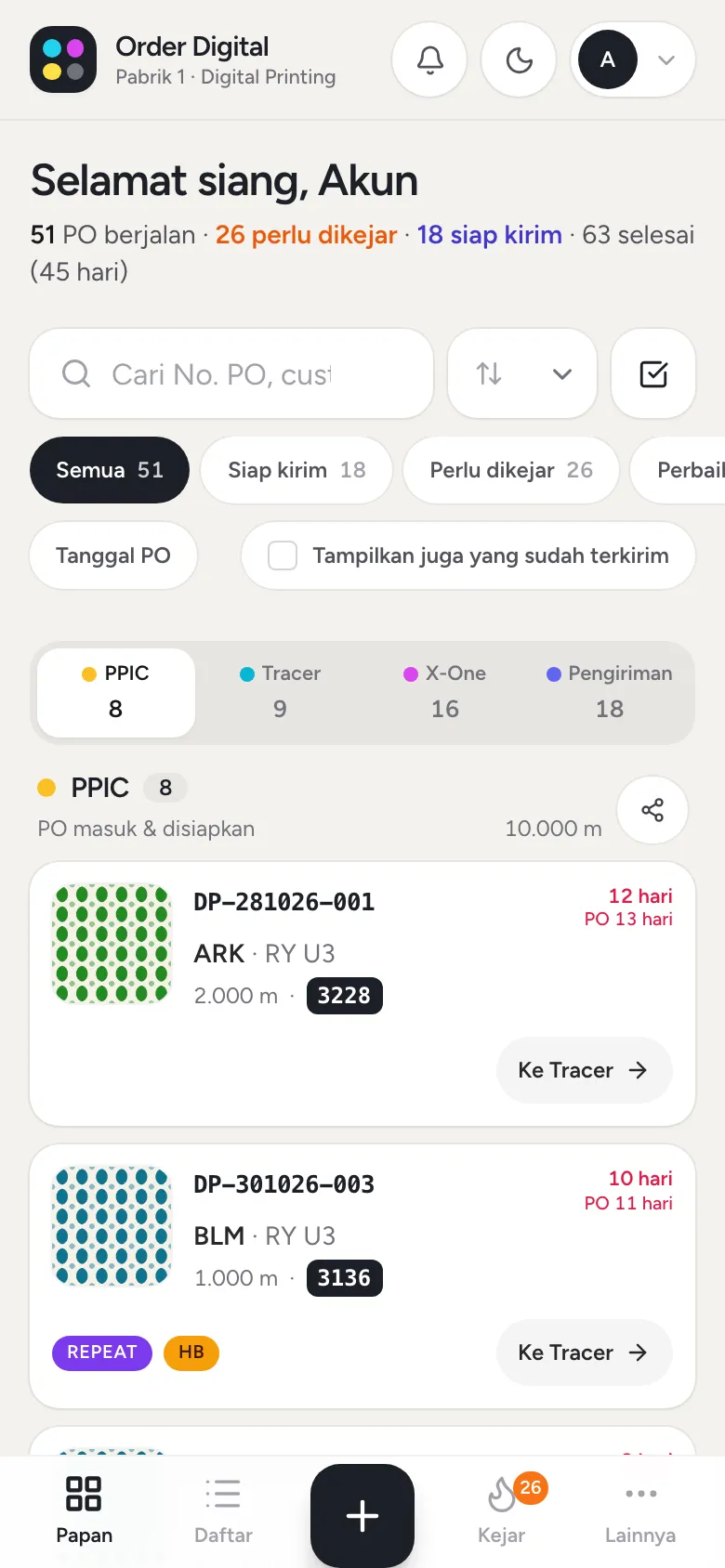
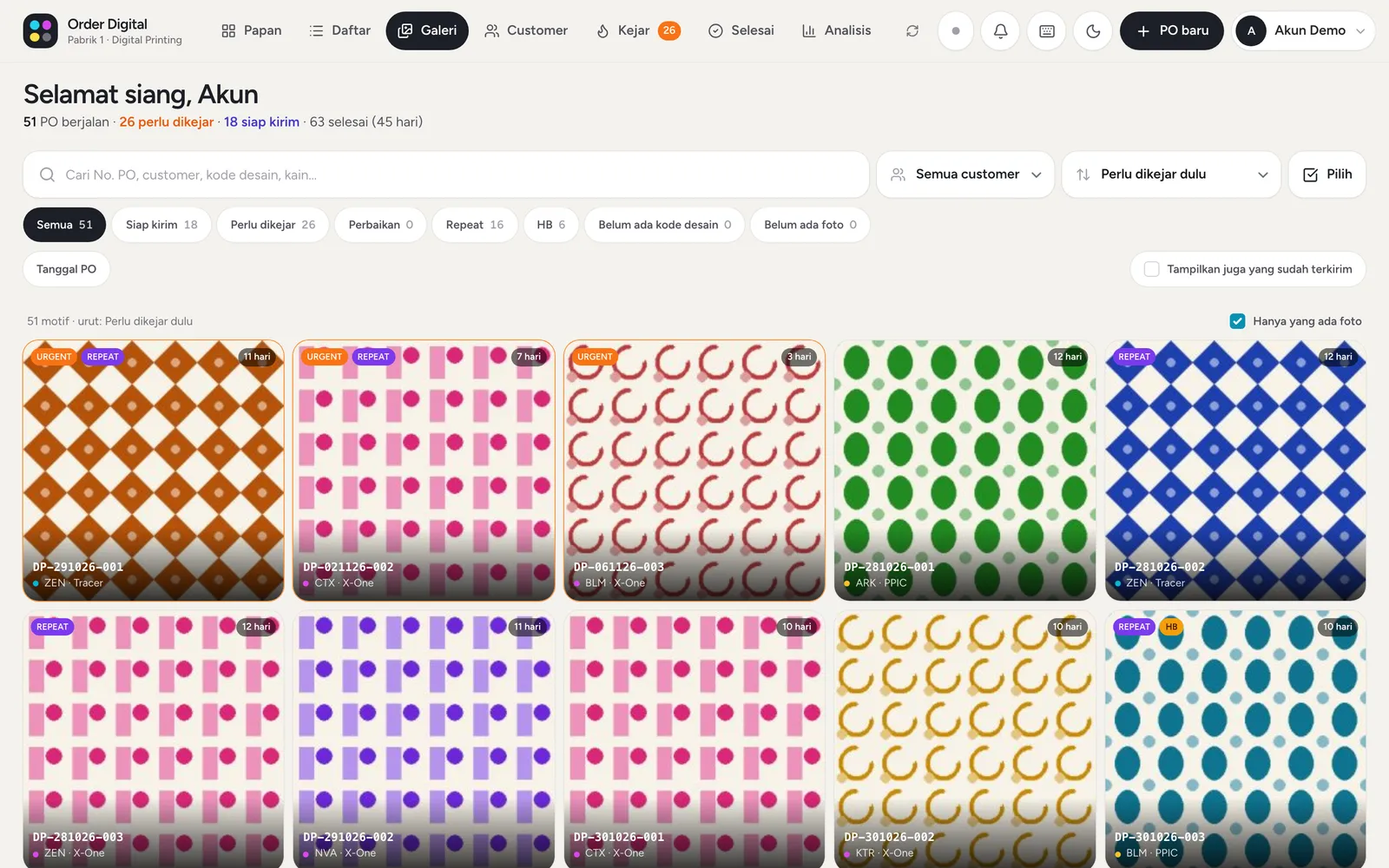
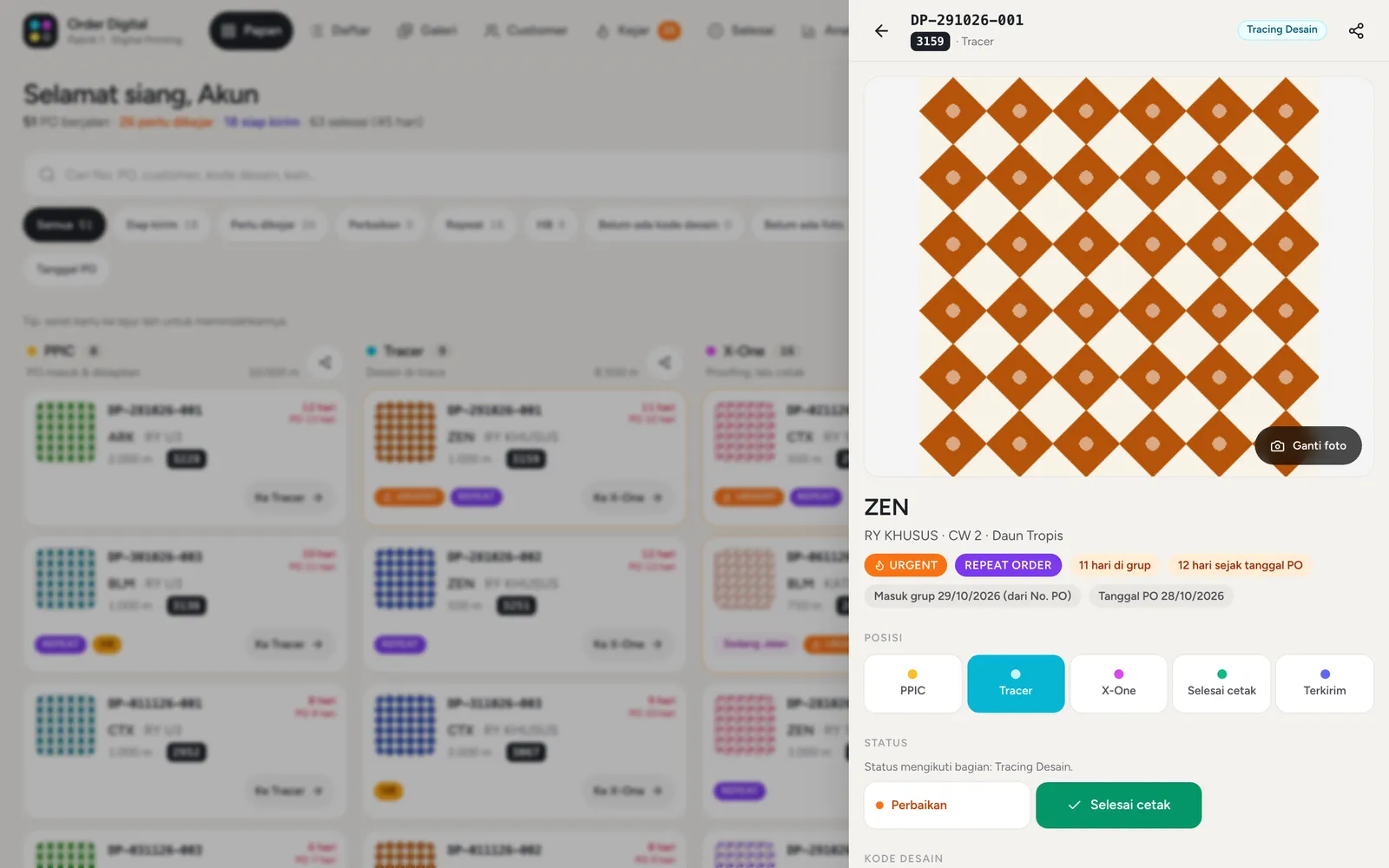
Order Digital is a module of the same factory system, built for the digital-printing team rather than directors. Each purchase-order line gets a permanent ID and moves across stations on a kanban board, with a list view, a motif gallery and a detail page holding the motif photo and stage controls. It has run on the factory server since October 2026, next to a Google Sheet that stays in sync with the web app.
Problem framing

From messy workflow to clearer product requirements.

The work started by separating staff operations from customer booking needs, then turning both into clearer product requirements.

Challenge

What made the work difficult?

Digital-printing orders were followed through a shared spreadsheet and chat messages, so it was hard to see which purchase orders were stuck, at which station, and which ones repeated earlier designs.

User and business need

What had to become clearer?

The PPIC, tracing, proofing, printing and shipping staff needed one shared view of every PO and its current stage, so late work could be chased early and progress could be updated from the web, a phone or WhatsApp, while the spreadsheet the team already used stayed current.

Process

How the project moved from requirements to usable flow.

01

The board was organised by the real stations instead of generic statuses, and each station got its own account, so the person who finishes a step is the one who moves it forward. Every ch...

Solution

What I built and why it mattered

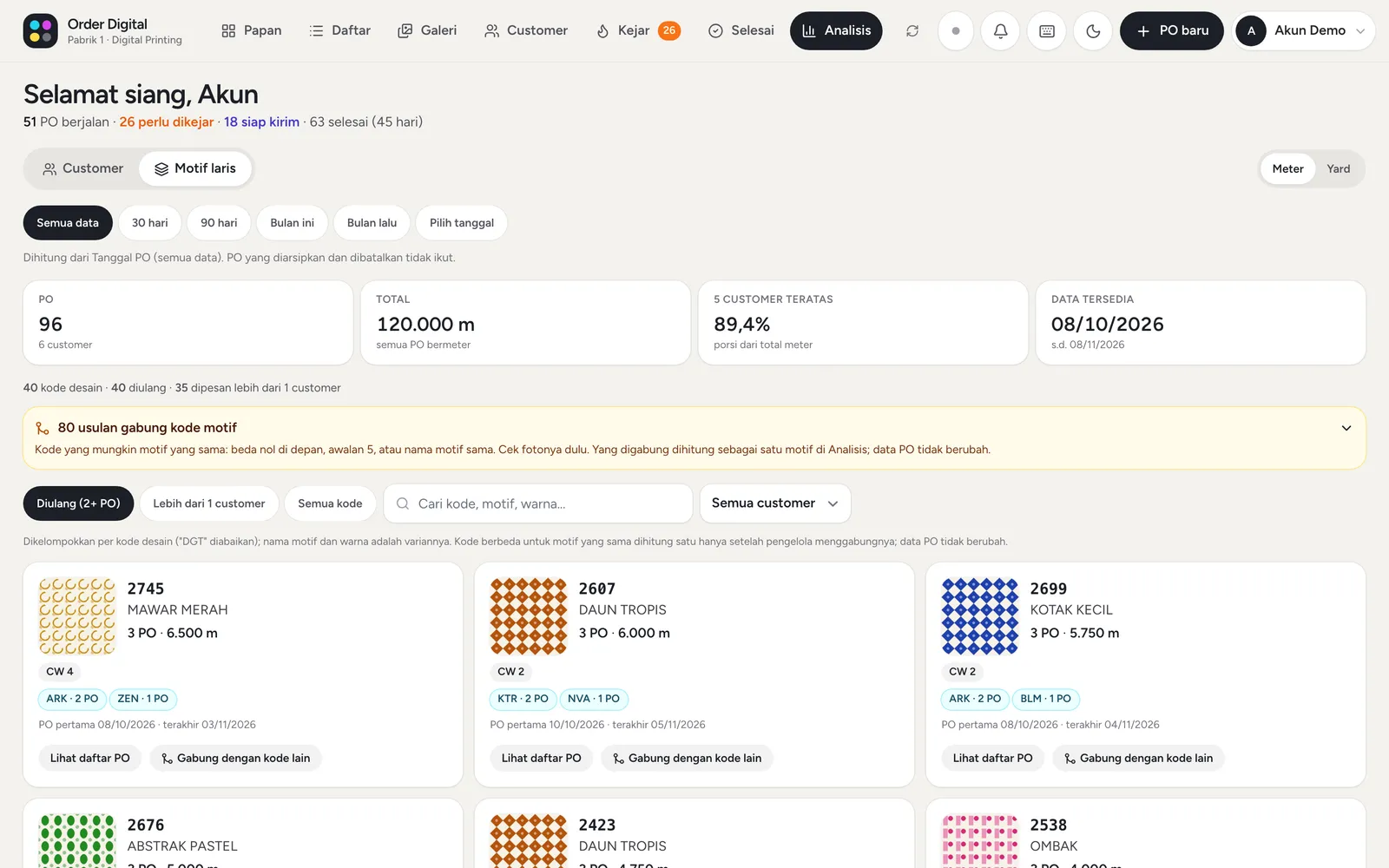
Order Digital provides a kanban board, list and motif gallery with filters for customer, PO date, repeat orders and finished work, a detail page with the motif photo and stage controls, a form for new POs with image upload, a view of orders that need chasing, per-customer pages, and customer and motif analysis that shows which designs are ordered most often. Two-way Google Sheet sync keeps the team's existing spreadsheet current, and WhatsApp commands let staff check orders without opening the app.

Outcome

Impact and proof points

The digital-printing team works from one shared board instead of a spreadsheet and chat threads, so it is clear where every order sits and which ones are falling behind. Staff at each station update progress from their own account, including from a phone, and the motif analysis shows which designs are ordered most often.

Reflection

What this case says about how I work.

Start from the real workflow before deciding the interface structure.

Make system states visible so users know what happened and what to do next.

Write interface copy that reduces follow-up questions, not just fills empty space.