Property management system 2026

Kosync

A boarding-house management system for owners and tenants, covering rooms, floor plans, maintenance reports, chat, broadcasts, and notifications.

Laravel 13 PHP MySQL Blade Tailwind CSS 4 Vite Lucide PHPUnit
Role Full-stack Developer
Year 2026
Stack Laravel 13, PHP, MySQL, Blade
Team Solo build
Overview

What this project needed to solve

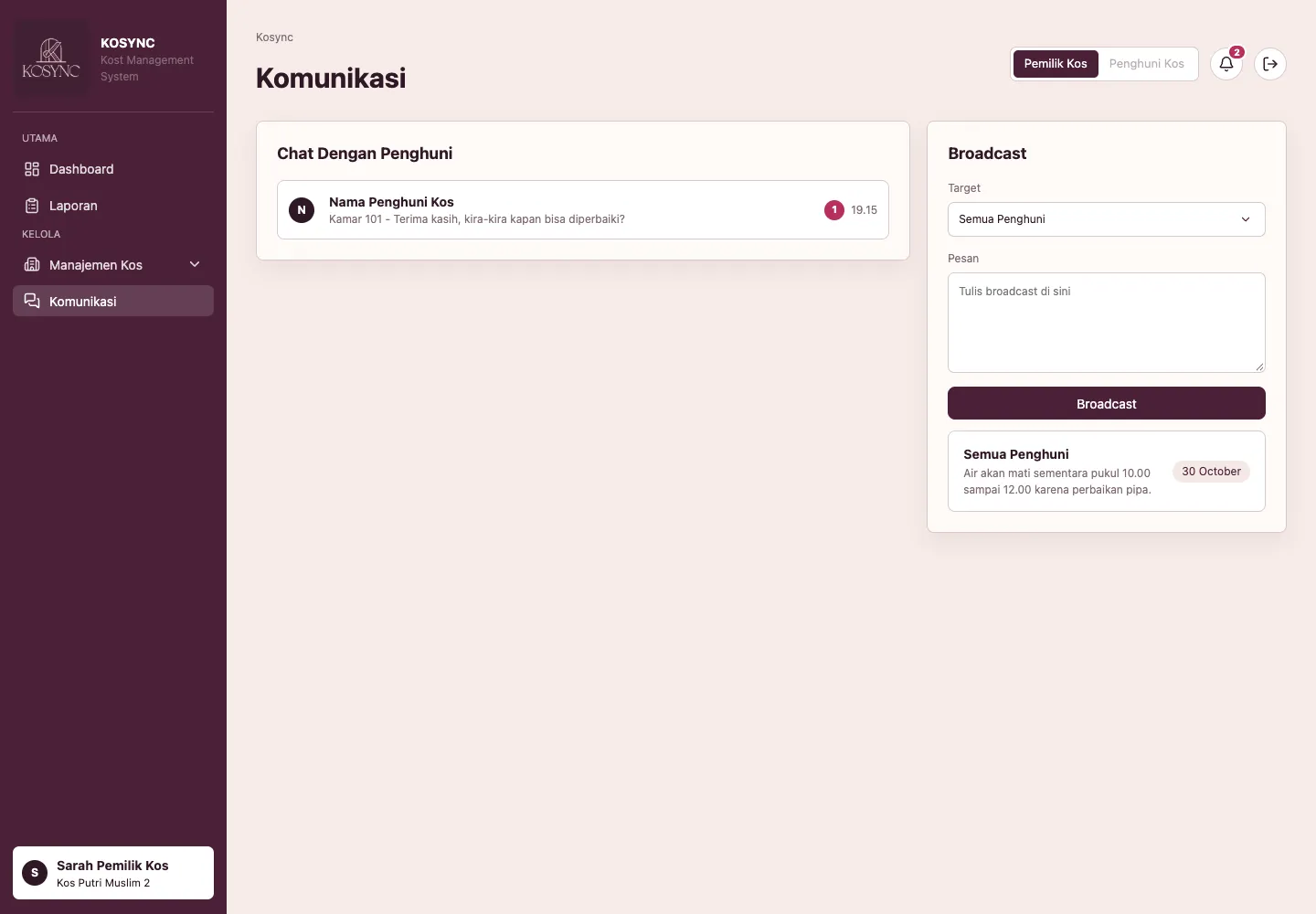
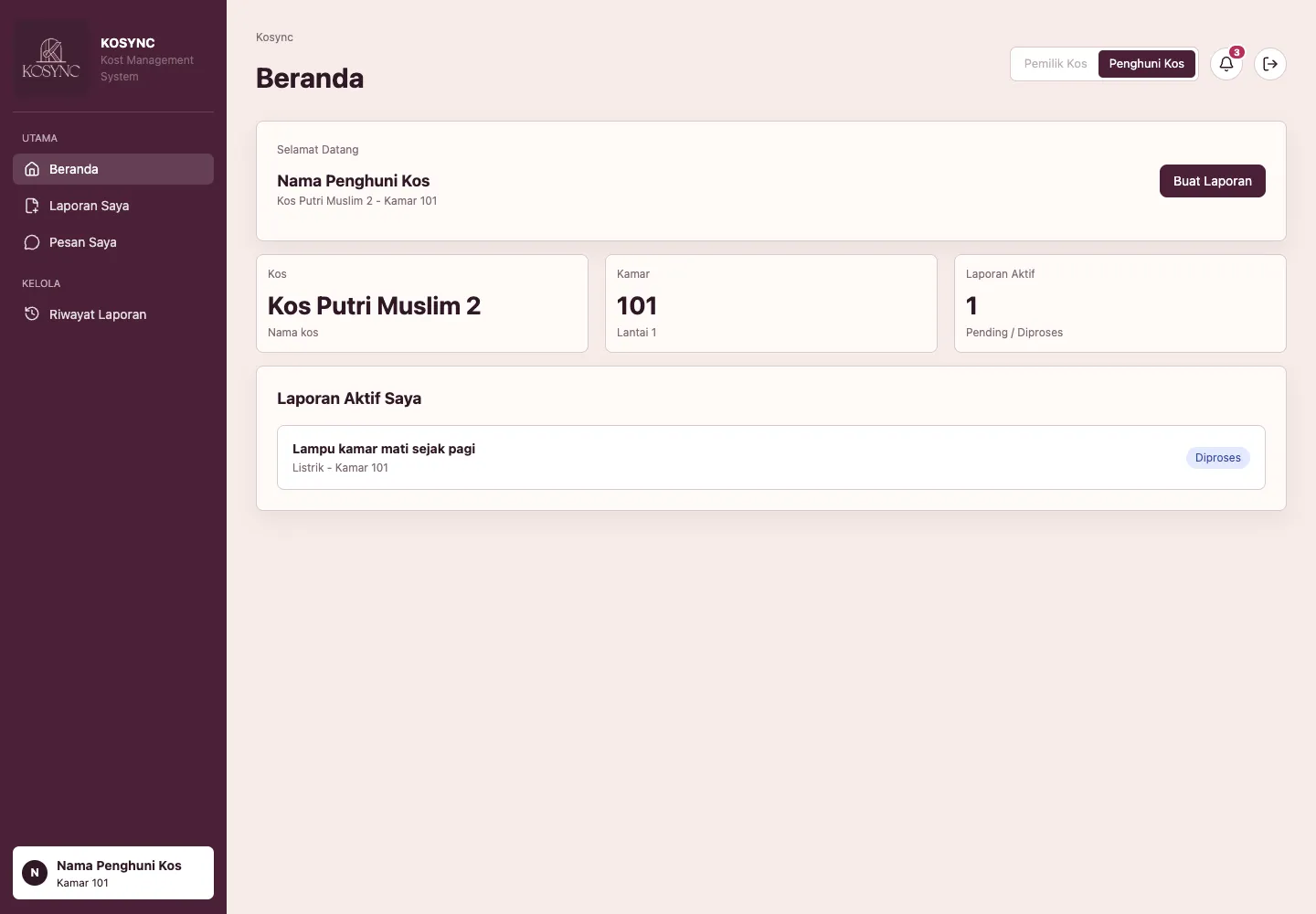
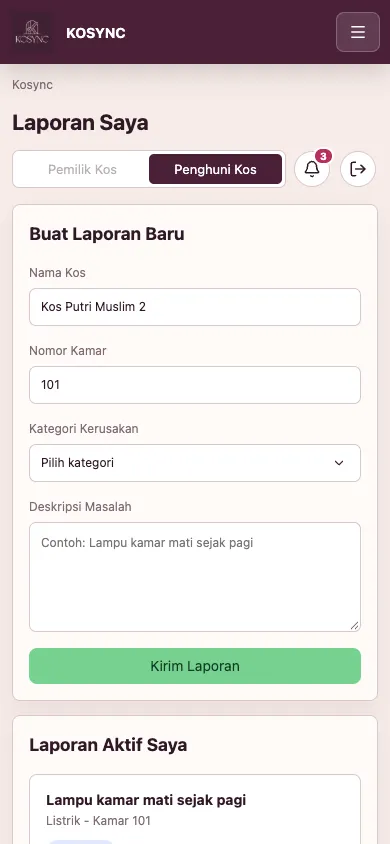
Kosync is a Laravel and MySQL web application for running a boarding house (kos) with two roles: owners and tenants. Owners manage rooms on a floor plan, assign tenants, handle maintenance reports, and talk to tenants through chat and broadcasts. Tenants register by choosing a kos and an empty room, submit maintenance reports, follow their status, rate completed repairs, and read announcements from the owner.
Problem framing

From messy workflow to clearer product requirements.

The work started by separating staff operations from customer booking needs, then turning both into clearer product requirements.

Challenge

What made the work difficult?

Day-to-day kos operations involve many small threads at once: which rooms are occupied, which repairs are pending, and which tenant asked what. The system had to serve two very different users in one app, keep each owner and tenant restricted to their own kos and data, and stay usable on a phone since tenants mostly report problems from their rooms.

User and business need

What had to become clearer?

Room status, tenant requests, and announcements are easy to lose when they are tracked by memory or scattered across personal messages. Owners need one place to see room occupancy and open repair reports, and tenants need a clear way to report problems and see what is happening with them.

Process

How the project moved from requirements to usable flow.

01

The app was split into an owner area (dashboard, reports, kos management, communication) and a tenant area (home, my reports, my messages, report history), with role and kos-based access...

Solution

What I built and why it mattered

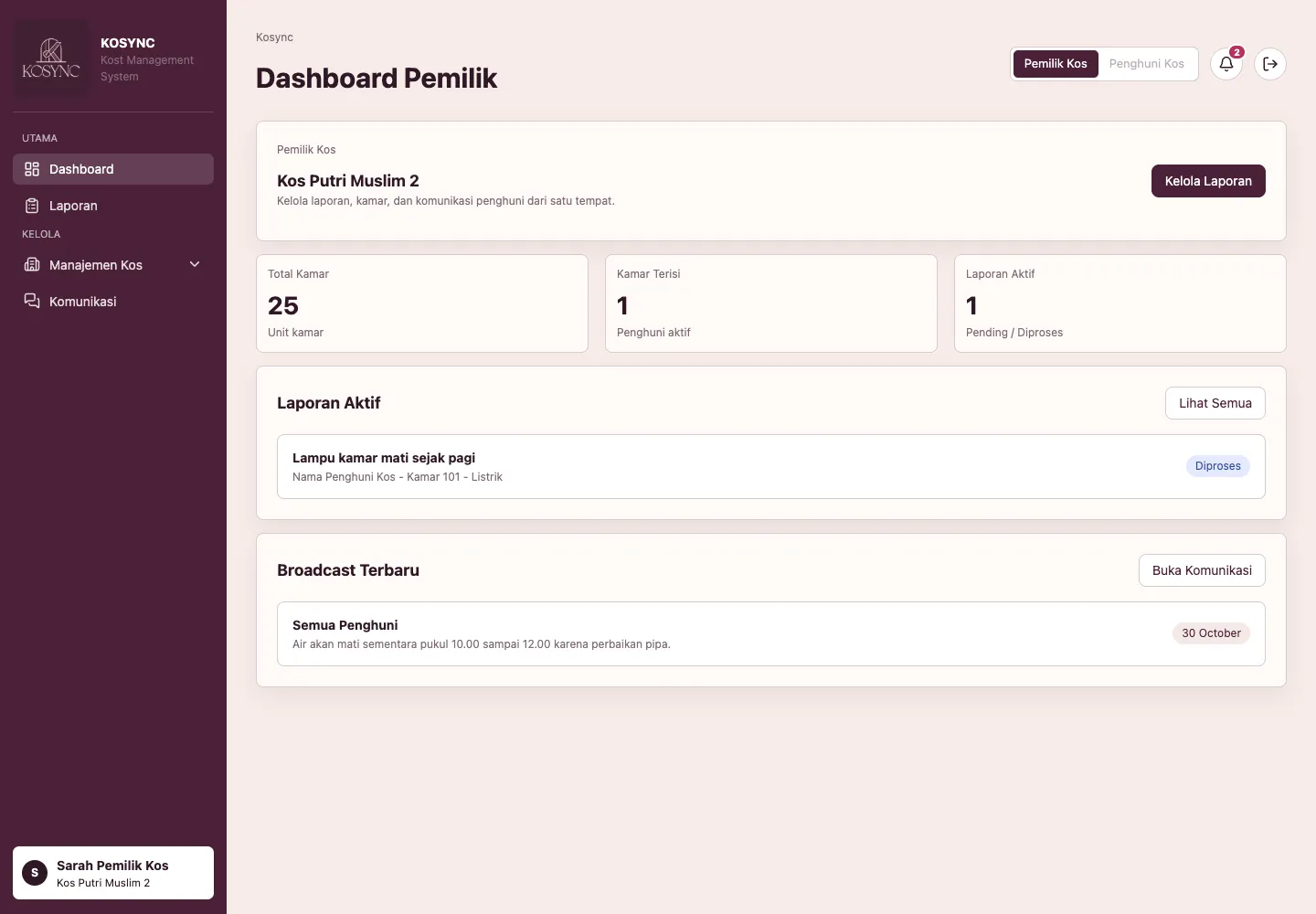
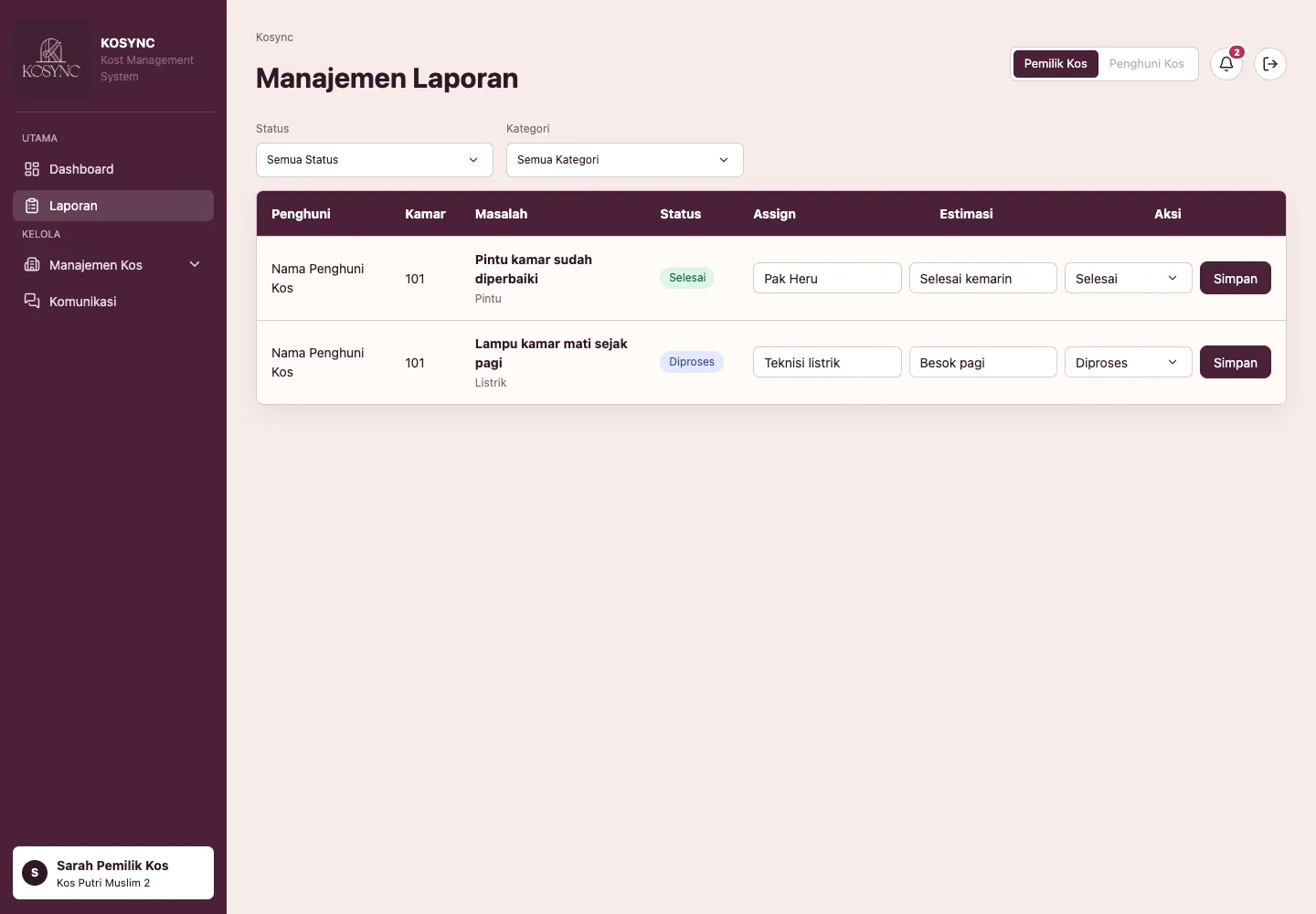
Owners get a dashboard summarising rooms, occupied units, and active reports, a floor plan and room list to add, edit, and delete rooms, and a report table where they set status, assigned staff, and estimated repair time. Tenants send maintenance reports by category, track them through pending, in progress, and done, and rate finished repairs. A communication module provides one-to-one chat, broadcasts to tenants, and notifications for unread messages and report updates, with room numbers sorted naturally and chat times shown in the configured timezone.

Outcome

Impact and proof points

Kosync gives a kos owner a single view of rooms, tenants, and open repairs instead of tracking them by hand. Tenants can report problems and follow their progress without chasing the owner, and announcements reach all tenants from one place. A separate PHP 8.2 package was prepared for deployment on DirectAdmin hosting.

Reflection

What this case says about how I work.

Start from the real workflow before deciding the interface structure.

Make system states visible so users know what happened and what to do next.

Write interface copy that reduces follow-up questions, not just fills empty space.